Pay in installments of $5.19 with
 ,
,
 and
and

Shipping Estimate
USA
- USA
- CAN
- USA
- CAN
Ships within 48 hours · Estimated delivery Oct 9 - Oct 14
 Promo Codes Available:
For Your Every Summer RSVP, with Code: SUMMER15
Description
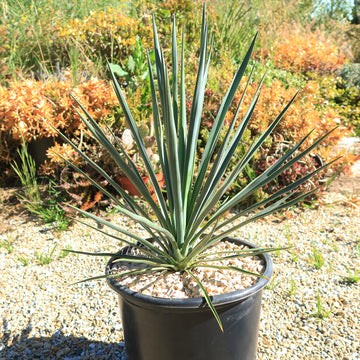
yucca plant in pot outdoors Shop' Yucca Blue Sentry' Care and Growing GuideIntroducing the Yucca Blue Sentry, known as Yucca rigida blue sentry, which is a stunning succulent plant known for its striking blue gray leaves and architectural form. It belongs to the Yucca, opens in a new tab genus and is commonly referred to as the Blue Sentry or Blue Yucca. The 'Blue Sentry' plant exhibits distinctive blue needled like upright growth, which eventually fades to powder blue, with a narrow yellow margin. The blue gray hue adds a
Introducing the Yucca Blue Sentry, known as Yucca rigida ‘blue sentry’, which is a stunning succulent plant known for its striking blue-gray leaves and architectural form. It belongs to the Yucca, opens in a new tab genus and is commonly referred to as the Blue Sentry or Blue Yucca.
The 'Blue Sentry' plant exhibits distinctive blue needled-like upright growth, which eventually fades to powder blue, with a narrow yellow margin. The blue-gray hue adds a cool and unique touch to any garden or landscape.
When fully mature, the Blue Sentry Yucca can grow up to 6 feet tall, making it a medium-sized yucca.
The plant grows into a cluster of evergreen leaves up to 3 feet wide, which are narrow, leathery, and sharp-spined, lasting several years.
Its compact and symmetrical growth habit makes it an excellent choice for both indoor and outdoor settings.
The Yucca Rigida Blue Sentry is native to the high-altitude regions of Mexico, particularly in the states of Hidalgo and San Luis Potosi.
It is well-adapted to arid and rocky environments, making it a great choice for xeriscaping or drought-tolerant gardens.
The flowers of Yucca Blue Sentry bloom in the summer with tall flower spikes. These flower spikes are adorned with clusters of creamy white flowers that attract pollinators like bees and butterflies. The flowers add a touch of elegance and beauty to the overall appearance of the plant.
To propagate your blue sentry yucca, one common method is by using stem cuttings. You can take a stem cutting from a mature Yucca Blue Sentry, let it dry out for a few days to form a callus, and then plant it in well-draining soil. Keep the soil lightly moist until the cutting establishes roots and starts to grow.
Watering Needs
Yuccas are native to arid regions and have evolved to survive in dry conditions. As a result, they are quite drought-tolerant and prefer well-draining soil. In general, it's best to water your Yucca Blue Sentry thoroughly but infrequently. To ensure optimal soil health, it's recommended to allow the top few inches of soil to dry out between waterings and check the moisture level before watering. If it feels dry, it's time to water; if it's still slightly moist, hold off for a few more days.
During the warmer months, you may need to water your Yucca Blue Sentry more frequently, as it will have increased water needs. However, be cautious not to overwater, as this can lead to root rot and other issues. Always prefer to be underwater rather than overwatered.
It's also important to consider the environment in which your Yucca Blue Sentry is placed. If it's in a bright, sunny spot, it may dry out more quickly and require more frequent watering. On the other hand, if it's in a lower-light area, it may need less water.
Light Requirements
When growing indoors, the Yucca Blue Sentry prefers bright, indirect light. Place it near a window that receives plenty of sunlight, but make sure to avoid direct exposure to harsh, intense sunlight. If your Yucca Blue Sentry doesn't receive enough light, it may become leggy, and its growth may slow down. So, find a spot where it can soak up the natural light and thrive.
For outdoor cultivation, it will appreciate full sun to partial shade. This plant loves basking in the sunlight, so find a location that receives at least 6 hours of direct sunlight per day. However, it can also tolerate some shade, especially during the hottest parts of the day. Just make sure it still gets enough light to keep its gorgeous blue-green foliage vibrant and healthy.
Remember, finding the right balance of light is key for your Yucca Blue Sentry's overall growth and well-being.
- If you notice the leaves becoming pale or yellowish, they might be getting too much direct sunlight.
- On the other hand, if the leaves are stretching towards the light or becoming dark and dull, they may need more exposure to bright, indirect light.
Optimal Soil & Fertilizer Needs
The Yucca blue sentry favors very airy, sandy soil that drains well. Planting them in ordinary soil will result in compacted roots, stunted growth, and most likely root rot. Instead, make or buy a well-draining potting mix, or ideally use our specialized succulent potting mix, opens in a new tab that contains 5 natural substrates and mycorrhizae to promote the development of a strong root system that helps your succulent blue yucca to thrive.
When it comes to fertilizing your Blue Sentry Yucca, it doesn't require excessive amounts of nutrients. During the active growing season, which is typically spring, you can fertilize the plant once a year using a balanced (5-10-5), water-soluble NPK fertilizer. To avoid overfeeding, make sure to dilute the fertilizer according to the package instructions. During the dormant season, which is usually fall and winter, you can reduce or even stop fertilizing altogether.
Remember, it's always a good idea to monitor your plant's growth and adjust the fertilizer routine accordingly. If you notice the leaves turning yellow or the plant showing signs of nutrient deficiencies, you may need to increase the frequency of fertilization. On the other hand, if the plant is growing vigorously and the foliage is healthy, you can stick to the regular fertilizing schedule.
Hardiness Zones & More
When growing indoors, the Yucca Blue Sentry thrives in moderate temperatures ranging from 35°F to 55°F. So, keep your Yucca Blue Sentry in a room where the temperature stays within this cozy range. It can thrive in both low-humidity environments, such as heated homes during the winter, as well as higher humidity levels found in bathrooms or kitchens. As long as the air isn't excessively dry, your Yucca Blue Sentry should be just fine. However, if you notice the tips of the leaves turning brown or the plant showing signs of dryness, you can increase the humidity by placing a tray of water near the plant or using a humidifier.
For outdoor cultivation, this winter hardy plant is typically recommended for hardiness zones 5 to 9. It can tolerate temperatures as low as -15°F. If you live in a colder climate below the USDA zone 5, you can still grow the Yucca Blue Sentry outdoors during the warmer months and bring it indoors during the winter to protect it from freezing temperatures.
Final Thoughts
Overall, the Yucca Blue Sentry is a stunning plant with its unique blue-green foliage and tall, sword-like leaves. It adds a touch of elegance and drama to any indoor or outdoor space. When it comes to care, this plant is quite low-maintenance. It thrives in bright, indirect light and prefers well-draining soil. Water it sparingly, allowing the top inch of soil to dry out between waterings. Additionally, it's important to protect it from extreme temperatures and avoid overwatering to prevent root rot. With a little attention and love, the Yucca Blue Sentry will reward you with its striking beauty and resilience.
Shipping Notes
- Free Standard Shipping on $100+ Orders to the USA.
- Except Preorder products are shipped in 48 hours.
- Delivery to the USA:
- Standard Shipping : 3-10 business days
- If time is of the essence, please consider selecting expedited delivery for faster service.
Exchange/Return Notes
- We offer a 30-day return/exchange service after receiving.
- Final sale items are not eligible for returns or exchanges.
- To process your return/exchange, please contact us at [email protected]
- Please click here for more details>>> Return & Exchange Policy