SKU: 95991315231
wildflower plants and seeds

wildflower plants and seeds Pollinator Wildflower Seed Blend Support the Pollinators

Sale price$23.20 Regular price$25.78
Save 10%

Pay in installments of $6.45 with ShopPay, AfterPay and Klarna

Shipping Estimate
USA
  • USA
  • CAN

Ships within 48 hours · Estimated delivery Sep 21 - Sep 26

Promo Codes Available:

For Your Every Summer RSVP, with Code: SUMMER15

Description

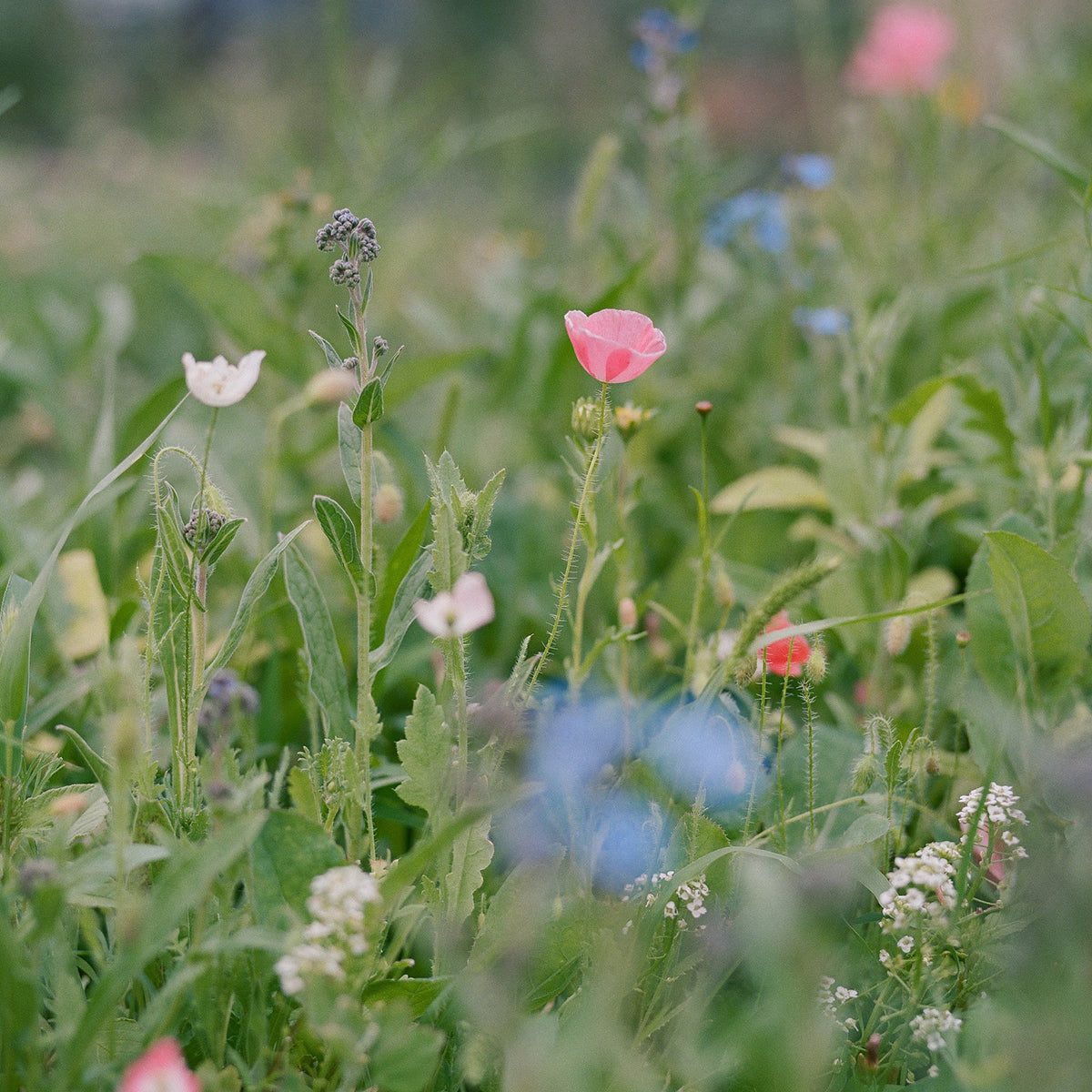
wildflower plants and seeds Pollinator Wildflower Seed Blend Support the PollinatorsCreate a vibrant pollinator paradise with our diverse wildflower seed blend! This carefully curated mix of native and naturalized annuals and perennials produces a stunning tapestry of colorful blooms that bees, butterflies, hummingbirds, and beneficial insects absolutely love. Perfect for creating natural wildflower meadows, filling bare spots in your garden, or transforming your lawn into a thriving ecosystem. Easy to grow, low maintenance once

Create a vibrant pollinator paradise with our diverse wildflower seed blend! This carefully curated mix of native and naturalized annuals and perennials produces a stunning tapestry of colorful blooms that bees, butterflies, hummingbirds, and beneficial insects absolutely love. Perfect for creating natural wildflower meadows, filling bare spots in your garden, or transforming your lawn into a thriving ecosystem. Easy to grow, low-maintenance once established, and provides season-long nectar and pollen for our essential pollinators.

What's in This Wildflower Blend:

  • Black-Eyed Susans (Rudbeckia hirta)
  • Purple Coneflowers (Echinacea purpurea)
  • Blanket Flowers (Gaillardia)
  • Cornflowers/Bachelor's Buttons (Centaurea cyanus)
  • California Poppies (Eschscholzia californica)
  • Plains Coreopsis (Coreopsis tinctoria)
  • Scarlet Flax (Linum grandiflorum)
  • Annual Baby's Breath (Gypsophila elegans)
  • Cosmos (Cosmos bipinnatus)
  • Sweet Alyssum (Lobularia maritima)
  • Shasta Daisies (Leucanthemum)
  • Crimson Clover (Trifolium incarnatum)

Annuals for Immediate Impact:

  • Bloom quickly (often within 6-8 weeks)
  • Provide vibrant color the first year
  • Fill in gaps while perennials establish
  • Self-seed for continuous blooms year after year
  • Examples: Cosmos, cornflowers, poppies, scarlet flax

Perennials for Long-Term Investment:

  • Establish strong root systems first year
  • Return bigger and better each year
  • Require minimal maintenance once established
  • Provide consistent food source for pollinators
  • Examples: Purple coneflowers, black-eyed Susans, blanket flowers

Season-Long Blooms:

  • Different varieties bloom at different times
  • Continuous nectar and pollen from spring through frost
  • Provides reliable food source when pollinators need it most
  • Extends the beauty of your garden for months

Maximum Pollinator Support:

  • Diverse flower shapes attract different pollinator species
  • Tubular flowers for hummingbirds and long-tongued bees
  • Open, daisy-like flowers for butterflies
  • Clustered blooms for short-tongued bees
  • Creates complete ecosystem for beneficial insects

Perfect For: Pollinator gardens, wildflower meadows, naturalized areas, erosion control, hillside plantings, lawn alternatives, no-mow zones, cottage gardens, cutting gardens, prairie restoration, wildlife gardens, sustainable landscaping, teaching kids about ecosystems, Earth Day projects, bee-friendly yards.

Why Pollinators Need Our Help:

The Pollinator Crisis:

  • Bee populations have declined by 30-50% in recent decades
  • Monarch butterflies have decreased by 90% since the 1990s
  • Habitat loss is the #1 threat to pollinator survival
  • Pesticide use and climate change compound the problem
  • One-third of our food supply depends on pollinators

Your Garden Makes a Difference:

  • Provides vital nectar and pollen when wild spaces disappear
  • Creates safe nesting and overwintering habitat
  • Supports entire ecosystems (pollinators feed birds and other wildlife)
  • Helps reverse dangerous population declines
  • Connects fragmented habitats through "pollinator corridors"

Growing Your Wildflower Meadow:

Best Planting Methods:

  • Direct sow outdoors in early spring after last frost or in fall
  • Prepare soil by removing weeds and loosening top 2-3 inches
  • Mix tiny seeds with sand for easier, more even distribution
  • Broadcast seeds over prepared area
  • Lightly rake to ensure seed-to-soil contact
  • Keep moist until germination (usually 7-21 days)
  • Thin if overcrowded once seedlings are 2-3 inches tall

Growing Tips:

  • Most varieties prefer full sun (6+ hours daily)
  • Well-drained soil, tolerates poor to average fertility
  • Water regularly until established (4-6 weeks)
  • Drought-tolerant once established
  • No fertilizer needed (encourages lush leaves over flowers)
  • USDA hardiness zones 1-12 (varies by individual species)

First Year Expectations:

  • Annuals will bloom first season (6-8 weeks from sowing)
  • Perennials focus on root development, may not bloom until year 2
  • Don't be discouraged! Perennials are building strength for spectacular future shows
  • Keep area watered and weed-free first season
  • Height varies by variety (typically 12-36 inches)

Maintenance for Years of Beauty:

  • Cut back once annually in late winter/early spring
  • Leave seed heads for birds through winter
  • Allow some plants to self-seed for continuous blooms
  • Deadhead annuals to extend blooming period
  • No fertilizing needed
  • Water only during severe drought

Coverage:

  • One packet typically covers 25-100 square feet (varies by seed count)
  • For larger areas, calculate: 1 oz per 150-200 square feet
  • Better to overseed than underseed for full, lush meadow
  • Mix well with sand or sawdust for even distribution

Perfect Planting Locations:

  • Sunny slopes and hillsides (helps prevent erosion)
  • Edges of property or along fences
  • Around mailboxes or lamp posts
  • Replacing unused lawn areas
  • Between vegetable garden rows
  • School gardens and public spaces
  • Alongside driveways and walkways

Wildlife Benefits Beyond Pollinators:

  • Seed heads feed songbirds through winter
  • Dense growth provides shelter for beneficial insects
  • Attracts ladybugs and lacewings (natural pest control)
  • Creates habitat for ground-nesting bees
  • Supports complete food web

Low-Maintenance Beauty:

  • Once established, requires minimal care
  • No mowing, fertilizing, or intensive watering
  • Tolerates poor soil conditions
  • Adapts to various climates and conditions
  • More resilient to drought and heat than traditional lawns
  • Saves time, money, and resources

Cutting Garden Bonus:

  • Many varieties make excellent cut flowers
  • Bring armfuls of blooms indoors all summer
  • Long-lasting in vases (especially black-eyed Susans and coneflowers)
  • Creates instant country cottage charm

Educational Value:

  • Perfect for teaching kids about plant life cycles
  • Observe pollinators visiting flowers
  • Learn about native plants and ecosystems
  • Understand food webs and biodiversity
  • Hands-on environmental stewardship

Storage Instructions: Store seeds in a cool, dry place away from direct sunlight and high humidity. Ideal storage temperature is between 32-41°F. Properly stored seeds remain viable for 2-3 years.

Gift-Ready Packaging: Beautiful seed packet makes a perfect gift for nature lovers, gardeners, eco-conscious friends, teachers, Earth Day, Mother's Day, housewarming gifts, or anyone passionate about supporting pollinators and creating sustainable landscapes.

Create an Even Bigger Impact: Pair with our Flower Seed Collection (6-pack) for complementary blooms, try our Pollinator Garden Seed Collection (12-pack) for maximum diversity, or browse our complete Garden Seeds Collection for additional varieties.

Shipping Notes
  • Free Standard Shipping on $100+ Orders to the USA.
  • Except Preorder products are shipped in 48 hours.
  • Delivery to the USA:
  1. Standard Shipping : 3-10 business days
  • If time is of the essence, please consider selecting expedited delivery for faster service.
Exchange/Return Notes
  • We offer a 30-day return/exchange service after receiving.
  • Final sale items are not eligible for returns or exchanges.
  • To process your return/exchange, please contact us at [email protected]
  • Please click here for more details>>> Return & Exchange Policy
SKU: 95991315231

Discover Niche Categories That Outsell wildflower plants and seeds

Top-Converting Item to Boost Your Average Order

4.9 ★★★★★
Based on 10 reviews
Sort
Highest Rating
Newest First
Oldest First
Product Reviews
M
Verified Purchase
Mr. Paul A. Ackermann
Belleville, US
★★★★★ 5
Dude, it's not just a horror novel
Format: Paperback
This is to the previous reviewer (C. Scanlan). If this is just a horror novel, it failed miserably. It is not exactly a blood ’n gore thriller. Compared to Stephen King, it is pretty tame. What puts the horror in this book is that it is social commentary. Mary Shelly is not just trying to scare us. It is more than just a “Friday the 13th” movie. Mary Shelly is delivering a message. It seems that everyone understands this except this reviewer. There have been several different interpretations of the novel (see [...] for 10 different meanings of the novel). ICE takes the interpretation that Shelly is saying science can go too far. This is a perfectly valid interpretation. One can disagree with this interpretation but let’s not resort to name calling and personal attacks – that those who hold such an interpretation are doing a “low level attempt to cash in on home schooling Christian paranoia and fear of health care” or believe that “AIDS [is] the fruit of sin”. My wife and I are Catholic parents and we sent our children to public schools He mocks the idea of a secular fundamentalist but then demonstrates what that is. A religious fundamentalist sees anyone who disagrees with him as being of the devil. A secular fundamentalist sees anyone who disagrees with him as guilty of “brainwashing” others. In both cases, true dialogue is impossible. Another thing that a fundamentalist does is that he sees things in opposite extremes. If you are warning of the dangers of trusting too much in science then you must be against science. There is no middle ground for the fundamentalist. If you see that science can sometimes go too far then that means you are against health care. But this is a non-sequitur. Nielson writes “Frankenstein’s placing of the creation of life within the scientific method first destroys the unrepeatability and systematically eliminates the other elements [of hope, love, beauty, creativity and sacrifice]”. Nielson is not criticizing the scientific method in total. He is only criticizing it in the creation of life. The reviewer writes “He thereby easily and explicitly condemns the whole process and philosophy of the scientific method”. But Nielson is not condemning the whole process of the scientific method. He is only condemning it in the creation of life. The reviewer then mocks the credentials of the critics in the book - “So who are these essayists superior to Norton's and Oxfords and free of deconstructionist feminist secular fundamentalism, experts so august Ignatius should want them mentioned on their product page yet are nowhere to be seen?” But this game can be played both ways. What are the credentials of this reviewer? Is this reviewer so august as to challenge these essayists? Again, this is merely an ad-hominem attack. I really do not care who has the best credentials. What matters is who makes sense. Sometimes intellectuals can make the dumbest claims. Read Paul Johnson’s book, “Intellectuals” (http://www.amazon.com/Intellectuals-Marx-Tolstoy-Sartre-Chomsky/dp/0061253170/ref=sr_1_1?ie=UTF8&qid=1421862888&sr=8-1&keywords=intellectuals). He compares the essayists unfavorably to “good solid Roman Catholic moral theology” from the likes of Richard A. McCormick S.J., who “is the renowned leader of Roman Catholic Moral Theology in the field of bioethics in the USA.” He overlooks the fact that A. McCormick S.J. has dissented from teachings of the Popes Paul VI, John Paul II, and Benedict XVI over contraception. The “renowned leader” in the Catholic Church in morality is first and foremost the pope. Since Richard A. McCormick has contradicted the popes, he cannot be a good solid Catholic theologian. Mary Shelly lived right after the Enlightenment – man is the measure of all things. She lived at a time when people believed that science will solve all our problems. This is called scientism. ICE contends that Shelly is saying that we may be expecting too much from science. It does not mean that Shelly was saying that we should reject science. And it does not mean that Shelly believes that we should go back to the Catholic faith. In fact, ICE acknowledges that Shelly was an anti-Catholic. But the Church believes that the kernel of truth can be found in others, even in anti-Catholics. This is part of the Catholic tradition. St Augustine learned from Plato and St Aquinas learned from Aristotle. ICE would take that kernel of truth and expound that with the fullness of the Catholic faith. You may disagree with the Catholic faith, or with ICE looking at Shelly’s book from a Catholic perspective. But this is at least as a legitimate an interpretation as any other. In fact, this interpretation seems closer to the truth than the others. This interpretation is the traditional interpretation, which means that it goes back further to Shelly’s time than the modern interpretations, and is therefore less likely to be in error. BTW, the reviewer wrote that “Opus Dei right wing publishing (or reprint) house is selling this novel is to milk the home school market and to support its own bizarre bio-ethical ideology”. This is factually wrong. The company that publishes Opus Dei’s books is Sceptre. But the publisher of ICE is Ignatius Press.
WAS THIS REVIEW HELPFUL?YesReportShare
Reviewed in the United States on January 22, 2015
R
Verified Purchase
RC Mom
Massapequa, US
★★★★★ 5
Good experience
Format: Paperback
It was all good.
WAS THIS REVIEW HELPFUL?YesReportShare
Reviewed in the United States on November 24, 2025
B
Verified Purchase
Brian J. Buckley
Lake Worth, US
★★★★★ 4
Love the Edition and Footnotes; Don't need the Cultural Criticisms
Format: Paperback
The layout of the book and the footnotes are each great. What mars the book, unfortunately, is the editor's need to make simplistic statements about cultural elements. Several times, for example, he addresses "feminism," even using the term "Franken-feminists" in a puerile manner at one point. As too many of these conservative Catholics do, he simplifies and comments about modern culture without nuance. In this case, it is simply unprofessional and inaccurate (i) to not capture the myriad differences in feminist thought (many of which he and his readers would accept) and (ii) thereby to make all feminists the same (e.g,, assuming the feminists of the 1970's are the same as today's.) This is all unfortunate because when he is just addressing the literary elements of the book, his comments are wonderful and helpful to the reader. Any reader should know that this presentation will be tilted in an unsophisticated and simplistic way toward a traditional Catholic view (a view that can indeed be defended well while still being careful and charitable to critics). With that caveat, he (or she) should still buy it and garner a good edition of the text.
WAS THIS REVIEW HELPFUL?YesReportShare
Reviewed in the United States on March 12, 2024
A
Verified Purchase
ABH
Battle Creek, US
★★★★★ 5
Great edition
Format: Paperback
Love Ignatius critical editions. There are so many scholarly essays that are so vague and uninteresting, or worse, try to de-construct the writer's work. Ignatius critical editions' essays are wonderful and do not miss the timeless point of the great literature the series brings forth.
WAS THIS REVIEW HELPFUL?YesReportShare
Reviewed in the United States on April 10, 2016
E
Verified Purchase
Elizofhungary
Fort Morgan, US
★★★★★ 5
Especially loved the forward
Format: Paperback
Especially loved the forward. I did not expect at all Joseph Pearce's take on the book! Buy this particular edition of Frankenstein if you wish to learn more than you anticipated about the author. I had no idea!
WAS THIS REVIEW HELPFUL?YesReportShare
Reviewed in the United States on December 19, 2016

recommand products