SKU: 96895276964
anthurium colonicum

anthurium colonicum Anthurium warocqueanum × waterburyanum – Hybrid Queen-Type Velvet

Sale price$18.95 Regular price$21.05
Save 10%

Pay in installments of $5.26 with ShopPay, AfterPay and Klarna

Shipping Estimate
USA
  • USA
  • CAN

Ships within 48 hours · Estimated delivery Jul 25 - Jul 30

Promo Codes Available:

For Your Every Summer RSVP, with Code: SUMMER15

Description

anthurium colonicum Anthurium warocqueanum × waterburyanum – Hybrid Queen-Type VelvetAnthurium warocqueanum waterburyanum Long, narrow velvet leaves shape Anthurium warocqueanum waterburyanum from the start. The blades develop a deep green surface, pale venation and a hanging growth direction that needs open space around and below the pot. The cross combines the elongated foliage associated with Anthurium warocqueanum with the Ecuadorian Anthurium waterburyanum parent. Indoors, the plant should sit where new blades can open and harden

Anthurium warocqueanum × waterburyanum

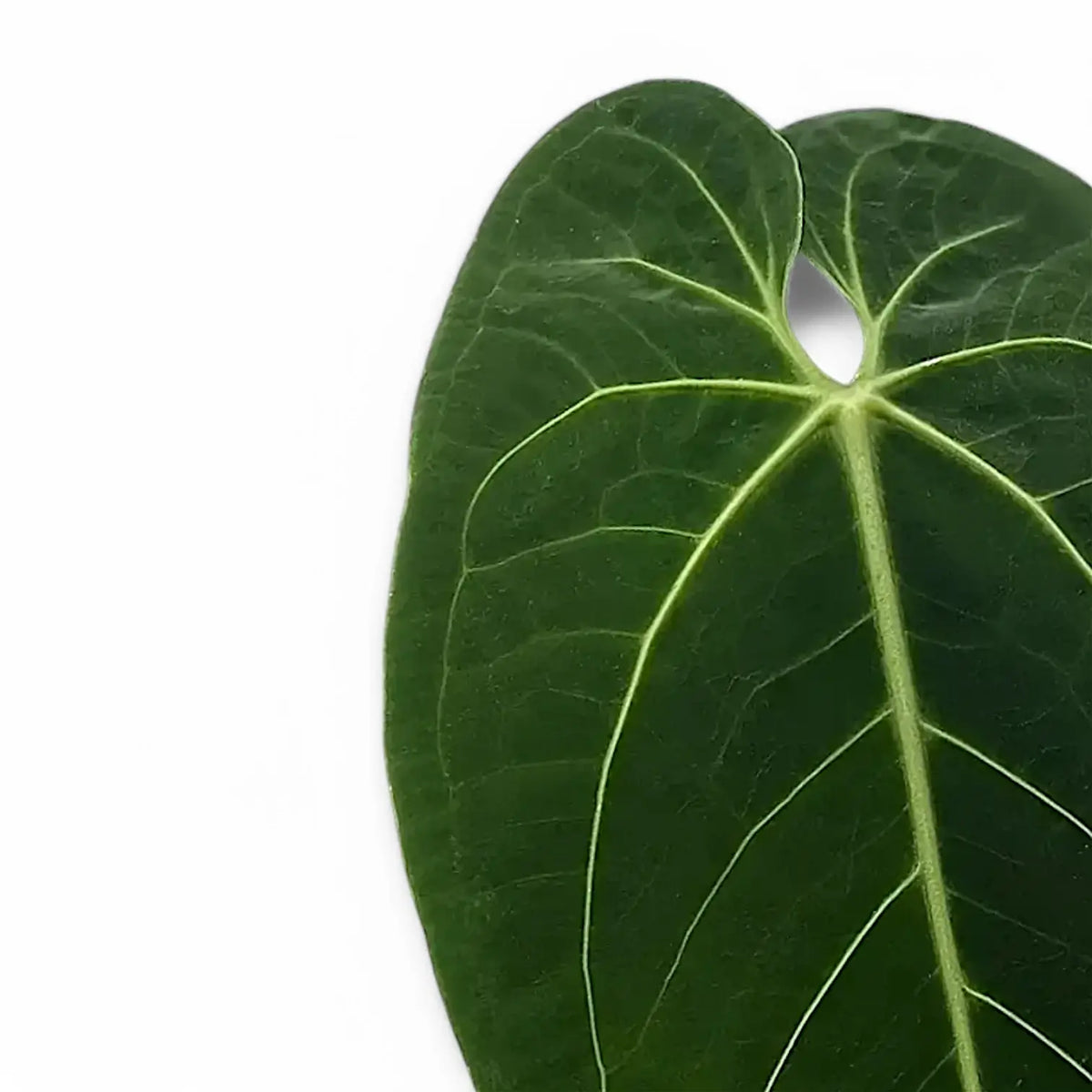
Long, narrow velvet leaves shape Anthurium warocqueanum × waterburyanum from the start. The blades develop a deep green surface, pale venation and a hanging growth direction that needs open space around and below the pot.

The cross combines the elongated foliage associated with Anthurium warocqueanum with the Ecuadorian Anthurium waterburyanum parent. Indoors, the plant should sit where new blades can open and harden without pressing against shelves, glass or nearby pots.

Long velvet leaf features

  • Elongated foliage: The leaves have a narrow, hanging shape with a soft velvet surface.
  • Pale vein pattern: Light veins run through the blade and become clearer as the leaf matures.
  • Downward leaf movement: The leaves need room below and around the pot as they lengthen.
  • Soft expanding blades: New leaves can crease or mark if they touch hard surfaces while unfurling.
  • Epiphytic root behaviour: Thick roots need a loose, airy substrate with steady but never stagnant moisture.
  • Space-sensitive growth: Open placement helps the long leaves expand without rubbing or folding against nearby surfaces.

Long-leaf growth and indoor placement

The leaf shape makes placement important. A shelf edge, plant stand or open bench can give the blades space to extend as they grow. If new leaves press against a wall or neighbouring plant, the soft velvet surface may crease before it has hardened.

The root zone should be open and oxygen-rich, similar to other velvet Anthurium with epiphytic tendencies. A heavy, compact mix keeps too much water around the roots and can weaken the crown before leaf symptoms become obvious.

Care for Anthurium warocqueanum × waterburyanum

  • Placement: Give the leaves physical space below the pot and avoid narrow shelves where new blades can press against hard surfaces.
  • Substrate: Choose a chunky Anthurium mix with bark, coarse mineral material and fibres that prevent the root zone from compacting.
  • Humidity: Higher humidity helps long new leaves unfurl without sticking, tearing or drying at the edges.
  • Water: Keep the substrate evenly moist but airy, with a slight dry-down at the top before the next watering.
  • Light: Use bright filtered light. Direct sun can scorch long velvet leaves and dry the tips.
  • Temperature: Keep the plant warm and protect it from cold drafts, cold water and cold wet substrate.
  • Feeding: Feed lightly during active growth and keep the root zone flushed if salts collect in the mix.

Problems with long velvet leaves

  • Creased new leaves: Long soft blades can crease if they rub against shelving, glass or other plants during expansion.
  • Brown tips and margins: Dry air, irregular moisture or root stress can brown the edges of the elongated leaves.
  • Loose crown: A wobbling base can point to root loss in a dense or overly wet mix.
  • Scorch marks: Strong sun can leave pale dry patches on the velvet surface.
  • Pests: Thrips, spider mites and mealybugs can hide along the midrib, petioles and undersides of long leaves.

Safety for Anthurium warocqueanum × waterburyanum

Anthurium is not safe for pets or children to chew. The plant contains calcium oxalate crystals, which can irritate the mouth, throat, skin and eyes after contact with sap or damaged tissue.

Botanical name background

The genus name Anthurium comes from Greek roots for “flower” and “tail”, referring to the spadix. Anthurium warocqueanum T.Moore was published in Florist and Pomologist in 1878 and is a Colombian epiphytic species.

Anthurium waterburyanum Croat & Scherber. was published in Aroideana 48(3):255 in 2025, in a revision of Anthurium section Cardiolonchium from Carchi Province, Ecuador.

Shipping Notes
  • Free Standard Shipping on $100+ Orders to the USA.
  • Except Preorder products are shipped in 48 hours.
  • Delivery to the USA:
  1. Standard Shipping : 3-10 business days
  • If time is of the essence, please consider selecting expedited delivery for faster service.
Exchange/Return Notes
  • We offer a 30-day return/exchange service after receiving.
  • Final sale items are not eligible for returns or exchanges.
  • To process your return/exchange, please contact us at [email protected]
  • Please click here for more details>>> Return & Exchange Policy
SKU: 96895276964

Discover Niche Categories That Outsell anthurium colonicum

Top-Converting Item to Boost Your Average Order

4.0 ★★★★★
Based on 18 reviews
Sort
Highest Rating
Newest First
Oldest First
Product Reviews
A
Verified Purchase
Amazon Customer
Cuba, US
★★★★★ 5
Lasts forever
Flavor Name: Bacon, Size: X-Large
Gizmo, my 92lb Labrador puppy, just loves this toy. He’s had one since he was 3 months old, and he just had his birthday. Absolutely good for hours of contented chewing and tossing. Highly recommended!
WAS THIS REVIEW HELPFUL?YesReportShare
Reviewed in the United States on June 6, 2026
H
Verified Purchase
happyfeeshie
Charlottesville, US
★★★★★ 4
Our dogs love these bones.
Flavor Name: Bacon, Size: X-Large
ALWAYS SUPERVISE A DOG WHEN THEY ARE CHEWING OR EATING. It doesn't matter what it is, they can choke on anything, we have had multiple instances where we have had to intervene to prevent or stop choking. I also was going to give this a 5 star review, but after reading the other reviews I didn't. The pet product industry really needs to educate the consumer more about pets and what type would do best with their product. Either way, I think my experience might be helpful to some and we are pretty happy with these bones because the dogs are. Here's the short version of my recommendations: I do not recommend Nylabones for dogs that are teething If an adult dog is chewing non-stop, Kongs with treats or peanut butter are great to help break up the chewing time. Even if they won't chew the Kong, they'll definitely stop whatever they are doing and lick out all of the peanut butter, which is actually calming and tiring for dogs. It might be worth trying a much larger size bone if you have a smaller dog. I never had small dogs until now, but the large bone seems to tire our 20 pound dogs out quicker than the smaller bones ever did, and their little jaws seem to handle it just fine. All of our dogs are gnawing with their back teeth at an angle on the white nyla part, as though they are rubbing their teeth against it to clean and sharpen them. The other type of chewing would use more of the front teeth and pull, like they're cleaning meat off of a bone, which isn't the right kind of chewer for Nylabones. Ours only occasionally chew them like that, so I know they are eating some pieces but it doesn't seem to affect their health since it's pretty limited and small (like a crumb). Here's my experience with these bones: We got our first Nylabone's for small breed puppies about a 18 months ago (not this product but same brand), and the puppies did try swallowing big chunks, so this type of bone was not great for them yet. However, our old large breed dog decided he wanted to chew on the small puppy bones too, so I got him the large one of this bone because it's huge with four points, and more his size. It could be a challenge for dogs who don't use their paws like hands, but ours seem to figure it out comfortable ways to chew on it. The old dog absolutely loved it, and had no big chunk issues. He very quickly figured out not to chew the red part because it is a totally different plastic than the white part (which is whatever "Nyla" is). My understanding from the package is that the white part is somewhat digestible, or safely passes through in very small pieces. I specifically remember that being why I decided to try these. Our big dog used to choke on raw hides when he was younger, so we had to stop all chewing things (which just meant more treats and walks so he was happy!), but now that he is older he is really enjoying this bone. Our old dog did wear one down to the nubs after about 3-6 months, and continued chewing on it occasionally (less often since there is less there to chew, and I knew I was supposed to toss it but he loved it so much). So I just got him a new one, but he still carries around the old one to show it off when we come in the door. He's chewing the new one now, so he seems to understand that the old one is 'done', and I haven't felt the need to take it away for safety reasons. The funny part is that the small dogs (now 2 yr old) actually chew on his large bone too, it's pretty comical given the size difference. I got them the extra-small versions and they haven't shown much interest in those. I decided to also get one for our new 'store' dog who is about 1.5 yrs old and a lab/boxer mix and lives at the store full time. It was to help him transition away from his neurotic tail biting and rope bone that is falling apart from his prior home (where he was EXTREMELY bored and was getting into everything). He has enjoyed the Nylabone for about 2 weeks. I don't think it's worn down too much yet, but he's definitely going to wear his out faster (maybe 2+ months?) than our other three dogs combined, but his teeth are also sharper and he chews more, so that's fair. So far, no pieces or chunks from the Nylabone. He also hasn't had a problem leaving the red part alone and he's learning how to use his paws more because of the shape of this thing. He still uses it when he's bored, but we've started increasing his training practice, so hopefully he'll be past the chewing phase by 2 yr old, and he has stopped getting into anything (like trash or 'stuff left out' that dogs manage to get into). He's also a huge and a very active dog, so having regular customers and activity help tire him out more than any bone can. Best of luck!
WAS THIS REVIEW HELPFUL?YesReportShare
Reviewed in the United States on May 31, 2019
K
Verified Purchase
kelly price
Carnegie, US
★★★★★ 5
Two pits they last forever
Flavor Name: Bacon, Size: X-Small
Dogs love this bone
WAS THIS REVIEW HELPFUL?YesReportShare
Reviewed in the United States on April 28, 2026
P
Verified Purchase
Precise Disarray
Dallas, US
★★★★★ 5
variety of texture and focal points, lab approved
Flavor Name: Bacon, Size: X-Large
My labs dont try to destroy stuff. They just like to gnaw on something once in awhile. This has lasted a very long time. Has the typical dents and other gnaw marks, but has otherwise withstood the test of time. The different texture (very firm but with mild "give") and spots to focus on has made this a favorite go-to toy when the need to gnaw comes about. We often do bully sticks and yak chews for the majority of their chewing needs, but the nylon style also seems to hit the spot.
WAS THIS REVIEW HELPFUL?YesReportShare
Reviewed in the United States on March 8, 2021
C
Verified Purchase
Cindy
San Leandro, US
★★★★★ 3
I find it sharp edges after just a little bit of chewing
Flavor Name: Bacon, Size: X-Large
My two Labradors are just not interested in this product also it's very sharp after chewing it briefly I like the Unique Style Unfortunately they are not interested maybe it's just them
WAS THIS REVIEW HELPFUL?YesReportShare
Reviewed in the United States on May 17, 2026

recommand products