SKU: 98357960818
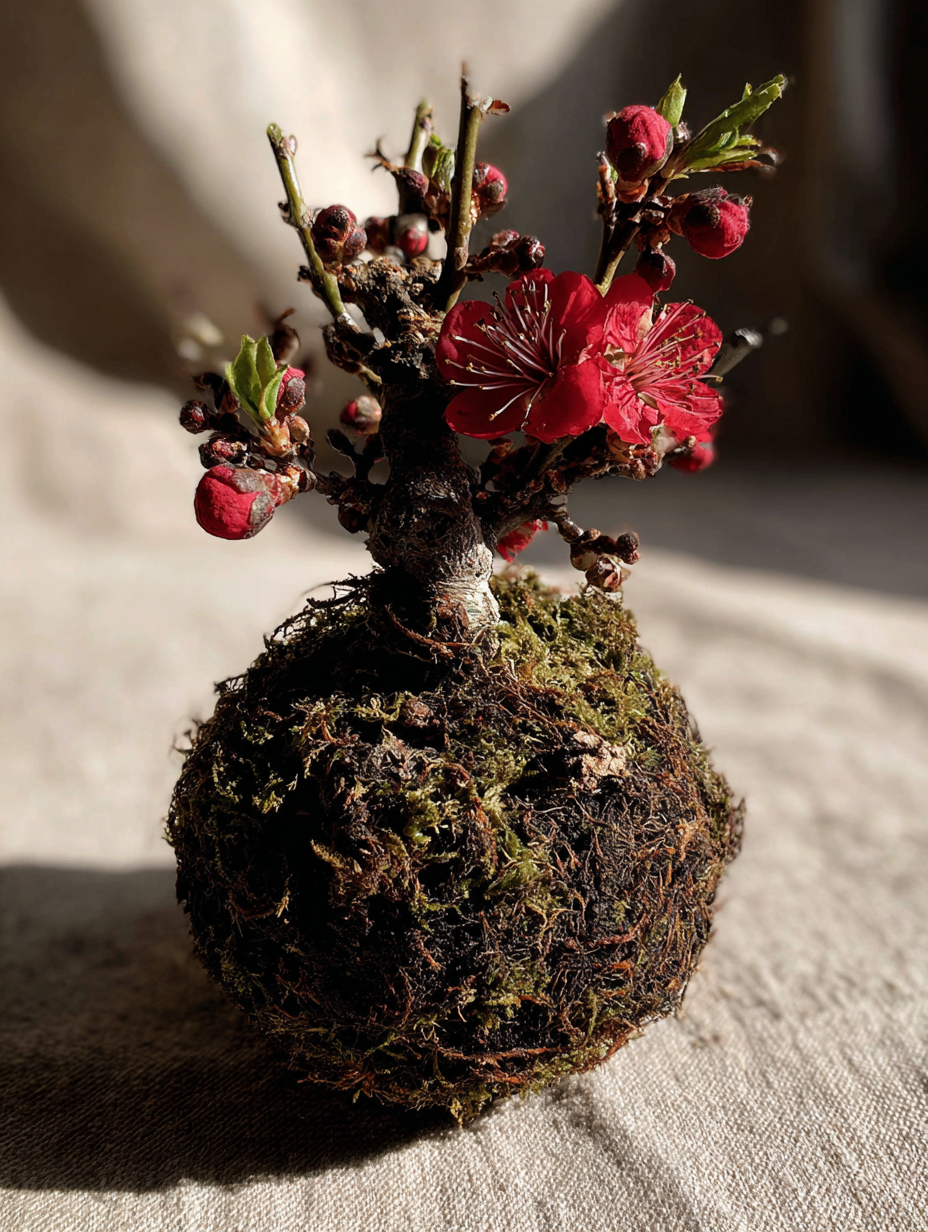
red plum blossom tree bonsai

red plum blossom tree bonsai Ume Plum Blossom Kokedama (Grown Bonsai)

Sale price$23.37 Regular price$25.97
Save 10%

Pay in installments of $6.49 with ShopPay, AfterPay and Klarna

Shipping Estimate
USA
  • USA
  • CAN

Ships within 48 hours · Estimated delivery Oct 25 - Oct 30

Promo Codes Available:

For Your Every Summer RSVP, with Code: SUMMER15

Description

red plum blossom tree bonsai Ume Plum Blossom Kokedama (Grown Bonsai)Celebrate the quiet arrival of spring with our Japanese Ume (Plum Blossom) Bonsai, carefully cultivated and beautifully presented in a traditional Kokedama moss ball planter. Among the first trees to bloom each year, the Ume Bonsai awakens with delicate blossoms in late winter to early spring (January to March), offering a powerful reminder that warmer days are just around the corner. While other trees still stand bare and silent, the Ume boldly

Celebrate the quiet arrival of spring with our Japanese Ume (Plum Blossom) Bonsai, carefully cultivated and beautifully presented in a traditional Kokedama moss ball planter. Among the first trees to bloom each year, the Ume Bonsai awakens with delicate blossoms in late winter to early spring (January to March), offering a powerful reminder that warmer days are just around the corner.

While other trees still stand bare and silent, the Ume boldly blossoms, filling the air with a gentle fragrance and gracing its branches with flowers in white, pink, or deep red. In Japanese culture, this tree is celebrated as a symbol of perseverance, purity, and renewal, often appearing in art and poetry as a hopeful sign that spring has begun its journey.

Rooted in the ancient Japanese art of Kokedama, this bonsai’s roots are wrapped in a moss-covered sphere, forming a natural and minimalist planter that’s both functional and stunning. Whether displayed on a decorative tray or suspended for a floating garden effect, the Ume Bonsai adds timeless elegance and seasonal beauty to any space.


Features:

  • One of the First Signs of Spring: The Ume Bonsai typically begins to bloom from January through March, signaling the end of winter with its beautiful flowers—even before other trees and plants awaken.

  • Available in 3 Blossom Colors: Choose from white (symbolizing purity), pink (representing grace), or red (symbolizing strength and passion). Each flower color offers its own unique atmosphere and visual charm.

  • Authentic Kokedama Planter: The traditional moss ball creates planting environment that supports healthy root growth while enhancing the bonsai’s organic beauty.

  • Compact and Elegant Form: With its graceful shape and small footprint, the Ume Bonsai is ideal for desks, windowsills, or entry tables—bringing nature’s poetry into even the smallest corners of your home.

  • Low Maintenance: Thrives in bright, indirect light. Mist the moss ball regularly to maintain moisture. A perfect bonsai for both seasoned collectors and beginners.

  • Deep Cultural Symbolism: In Japan, the plum blossom is admired not only for its beauty, but for its strength in blooming through the cold. It symbolizes endurance, renewal, and the quiet strength of new beginnings.


Why Choose Our Japanese Ume Bonsai in Kokedama?

This Ume Plum Blossom Bonsai is more than just a plant, it’s a living celebration of resilience and rebirth. Its early blooms bring color and joy when it’s needed most, and its symbolic meaning adds depth and intention to your space. Whether you’re gifting it or enjoying it yourself, this bonsai invites you to pause and appreciate the subtle transitions of the seasons.

Each Ume Bonsai is hand-selected and uniquely shaped, with no two trees exactly alike. You’re not just receiving a plant, you’re welcoming a living piece of Japanese tradition into your life.


Please Note:

Blooming typically occurs between January and March, though exact timing may vary depending on climate and care. Blossom color selection is available while supplies last. Variations in size, shape, and branch structure are natural and part of each tree’s unique charm.

Order your Japanese Ume Bonsai in a Kokedama Moss Ball Planter today and bring home the beauty, hope, and quiet strength of Japan’s earliest spring flower.

Shipping Notes
  • Free Standard Shipping on $100+ Orders to the USA.
  • Except Preorder products are shipped in 48 hours.
  • Delivery to the USA:
  1. Standard Shipping : 3-10 business days
  • If time is of the essence, please consider selecting expedited delivery for faster service.
Exchange/Return Notes
  • We offer a 30-day return/exchange service after receiving.
  • Final sale items are not eligible for returns or exchanges.
  • To process your return/exchange, please contact us at [email protected]
  • Please click here for more details>>> Return & Exchange Policy
SKU: 98357960818

Discover Niche Categories That Outsell red plum blossom tree bonsai

Top-Converting Item to Boost Your Average Order

4.0 ★★★★★
Based on 23 reviews
Sort
Highest Rating
Newest First
Oldest First
Product Reviews
J
Verified Purchase
Judith Priddy
Los Angeles, US
★★★★★ 5
So glad that I have bought these books from Amazon
Format: Paperback
Still working on getting through, I try and read more each day
WAS THIS REVIEW HELPFUL?YesReportShare
Reviewed in the United States on November 5, 2025
A
Verified Purchase
Adam C. Driver
Lake Worth, US
★★★★★ 5
Must read
Format: Paperback
Impressive second book by Justin Driver.
WAS THIS REVIEW HELPFUL?YesReportShare
Reviewed in the United States on October 1, 2025
J
Verified Purchase
james p. whitters III
Houston, US
★★★★★ 5
Excellent!
Format: Paperback
Excellent read!
WAS THIS REVIEW HELPFUL?YesReportShare
Reviewed in the United States on October 5, 2025
B
Big Pumpkin
Charlottesville, US
★★★★★ 1
A Disconnected and Legally Shaky Defense of Racial Preferences
Format: Paperback
While this book raises some thought-provoking points, it ultimately reads like a product of self-righteous elites disconnected from reality and from the American public. 1. Ignores public opinion. The author never acknowledges that polls consistently show Americans oppose racial preferences in college admissions. Proposition 16—which would have allowed such preferences—was defeated by a wide margin in 2020 in California, one of the nation’s most liberal states. A Brookings poll found that virtually all racial groups, including Black respondents, supported the Supreme Court’s Students for Fair Admissions (SFFA) decision. 2. Starts with a strange premise. The first chapter claims conservatives will “regret” the SFFA ruling because universities will continue racial preferences covertly. But that sidesteps the real question: why shouldn’t colleges comply with the ruling’s letter and spirit? 3. Offers dubious legal advice. In Chapter Three, the author—himself a law professor—floats risky ideas for “working around” the Supreme Court’s decision. Many of these suggestions rest on shaky legal ground, as anyone familiar with the Second Circuit’s CACAGNY v. Adams, 116 F.4th 161 (2d Cir. 2024), would recognize. 4. Ignores proportionality and real-world outcomes. The book argues for “diversity” preferences without asking how much preference is justified. In reality, Asian American applicants face steep penalties. e.g. Stanley Zhong was rejected by five University of California campuses’ Computer Science programs as an in-state applicant—shortly before Google hired him for a full-time, Ph.D.-level software engineering position. Meanwhile, UC San Diego’s own freshman math-placement data show a surge of students—mostly “underrepresented minorities” favored by UC—placed into remedial courses, some testing at a 4th-grade level. It is hard to see how admitting these students is helping them other than allowing some elites to make themselves feel good or get a promotion. If this book represents what passes for legal scholarship at Yale, the state of American legal education should worry us all.
WAS THIS REVIEW HELPFUL?YesReportShare
Reviewed in the United States on October 12, 2025
J
Jason Galbraith
Belleville, US
★★★★★ 5
Adherence to the Rule of Law Must Not Become a Fair Weather Sport
Format: Paperback
The memorable quotation I have used for the title of this review comes from the second chapter (I think) of "The Fall of Affirmative Action." What is actually happening in the United States is that the law is being enforced rigorously against "enemy" institutions such as those of higher learning and not at all against those with power, money, or affinity for same. The author, an African-American Yale Law professor, devotes his first chapter to the ways in which conservatives might critique the SCOTUS precedent that ended affirmative action and his second to the ways in which liberals might critique it. His most invaluable contribution to the debate is that civil rights can be advocated from an anti-classification standpoint or an anti-subordination standpoint, with anti-subordinationists on both sides of the affirmative action debate. This forced me to take perhaps a harder look at my own beliefs than most books or articles about affirmative action. African-Americans are certainly subordinated in reality by being excluded from higher education but they are subordinated mostly in the minds of white Americans by the fact that a white applicant with the same scores, extracurriculars and admission essays might not get in. That at least is the conclusion I have come to. "Students for Fair Admissions," the organization that brought down affirmative action before SCOTUS, has now sued those few elite educational institutions that DIDN'T see sharp drops in their African-American enrollment. One strongly suspects that SFFA if not the "Justices" they persuaded will be happy only with a formal quota for African-Americans which is half or less their proportion in the population of the state where the institution is located.
WAS THIS REVIEW HELPFUL?YesReportShare
Reviewed in the United States on November 4, 2025

recommand products