Pay in installments of $6.34 with
 ,
,
 and
and

Shipping Estimate
USA
- USA
- CAN
- USA
- CAN
Ships within 48 hours · Estimated delivery Oct 19 - Oct 24
 Promo Codes Available:
For Your Every Summer RSVP, with Code: SUMMER15
Description
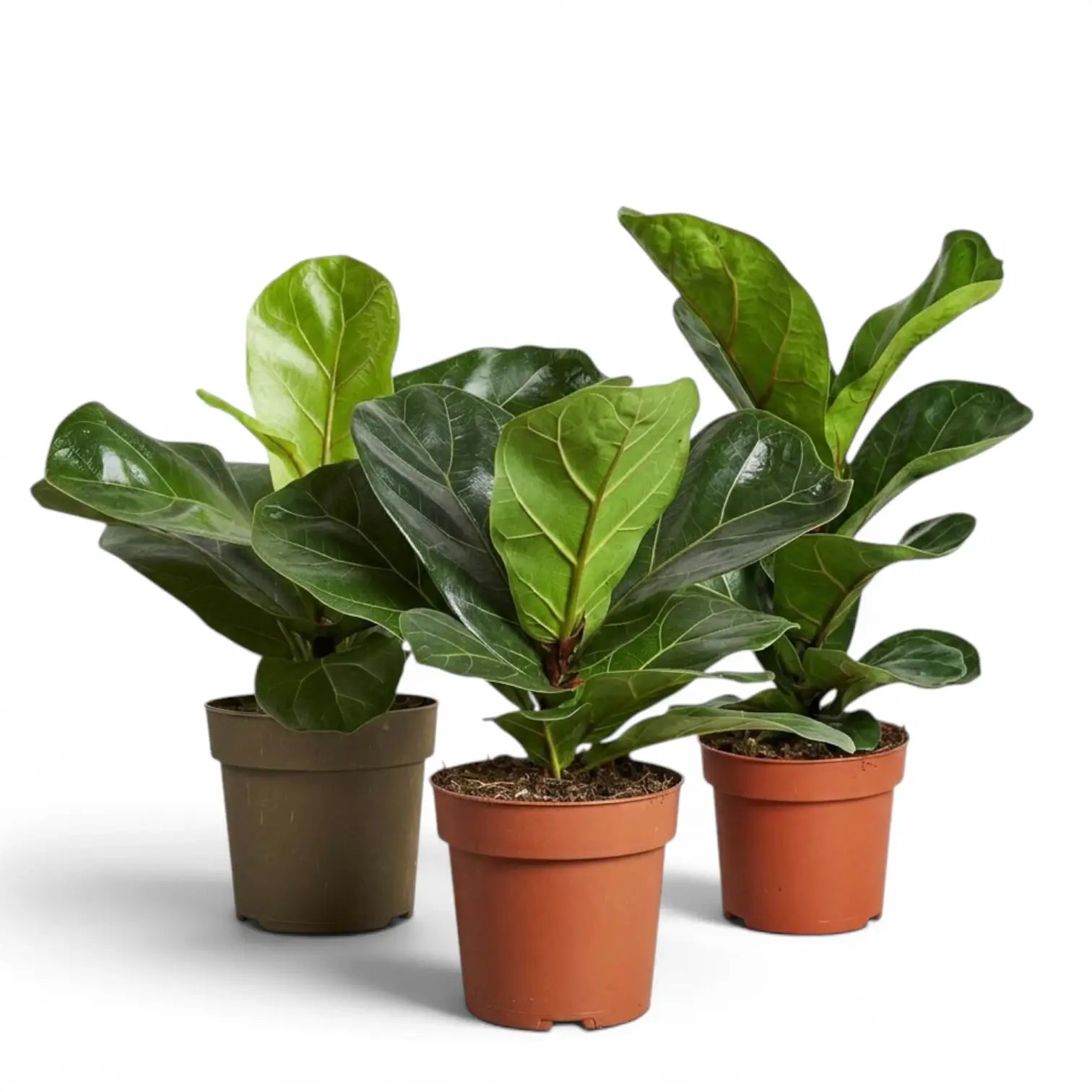
foliage fiddle leaf fig Ficus lyrataFicus lyrata Ficus lyrata, the fiddle leaf fig, is a large leaved evergreen fig with a woody trunk and broad, lyre shaped foliage. Its leaves are glossy, leathery, and strongly veined, often widening toward the tip and narrowing through the middle to create the familiar fiddle outline. This species is a hemiepiphytic tree from wet tropical West and West Central Africa. Indoors it is grown as a container tree, where bright filtered light, regular
Ficus lyrata
Ficus lyrata, the fiddle-leaf fig, is a large-leaved evergreen fig with a woody trunk and broad, lyre-shaped foliage. Its leaves are glossy, leathery, and strongly veined, often widening toward the tip and narrowing through the middle to create the familiar fiddle outline.
This species is a hemiepiphytic tree from wet tropical West and West-Central Africa. Indoors it is grown as a container tree, where bright filtered light, regular watering and an airy root zone allow new leaves to harden on a woody stem.
Ficus lyrata leaf and trunk features
- Leaf shape: Large obovate to fiddle-shaped leaves can reach impressive size, with visible veins and wavy margins.
- Growth habit: Develops a woody trunk with leaves held along the stem and branching after pruning or maturity.
- Natural background: Ficus lyrata is a wet-tropical African hemiepiphytic tree; indoors it prefers warmth, bright filtered light and an airy container root zone.
- Indoor focus: Container-grown plants develop the oversized leaves and visible trunk structure, while flowers and figs are rarely part of indoor cultivation.
Large leaves and hemiepiphytic growth
In its native range, Ficus lyrata grows in wet tropical forest conditions with warmth, filtered light and steady moisture. The species can begin life above ground level in the forest and later develop woody, tree-forming growth, while indoor plants rely on their container root system for all water and nutrient uptake.
The large leaf surface reacts quickly to changes in light and watering. Leaves that expand in stable bright conditions are usually firmer and more evenly developed, while sudden movement, cold draughts or inconsistent watering can show as spotting, edge damage or leaf drop.
Care details for Ficus lyrata
- Light: Give bright filtered light, with gentle direct sun only after acclimation. Large leaves develop in bright filtered light, but leaves formed in softer indoor light can scorch if moved abruptly.
- Watering: Water thoroughly once the upper substrate has dried. Rehydrate the root ball evenly, then allow drainage so the lower roots remain aerated.
- Substrate: Use a chunky, stable mix with bark, coco chips, perlite, pumice, or similar coarse material. The mix should hold moisture between coarse particles while draining freely around the roots.
- Temperature: Keep warm, ideally above 18 °C, and avoid cold draughts. Temperature swings can reduce water uptake and lead to leaf marking.
- Humidity: Moderate humidity reduces edge stress on new leaves, especially when light and watering are already marginal. Very dry air can increase browning along the margins.
- Feeding: Feed lightly during active growth. Large leaves need nutrients, but excess fertiliser in a pot can burn roots and worsen brown edges.
- Pruning: Cut above a node to manage height or stimulate branching. Branching is more reliable when the plant is warm, bright, and actively growing.
- Leaf care: Wipe dust from the broad leaf surfaces with a damp cloth to keep the surface clear.
Ficus lyrata troubleshooting cues
- Brown patches: Check for over-wet roots, cold exposure, or abrupt sun exposure. Inspect the root ball before changing the watering routine.
- Leaf drop: Often follows a move, draught, dry root ball, or saturated substrate. Stabilise the position and let the plant rebuild through new growth.
- Small new leaves: Usually points to inadequate light, limited roots, or weak nutrition during active growth. Improve light first, then assess pot size and feeding.
- Red speckling on new leaves: Can appear when expanding leaves experience uneven moisture or pressure changes. Keep watering steadier and avoid letting the root ball swing between extremes.
- Sticky residue or pests: Check leaf undersides, veins, and stems for scale, mealybug, or mites. Large leaves make inspection easy, but pests often start along the veins.
Ficus lyrata safety
Ficus lyrata is not pet-safe. Leaves and stems contain irritating sap that can cause mouth irritation, drooling, vomiting, or digestive upset if chewed, and the latex may irritate skin during pruning or propagation. Keep it away from pets and small children, and wear gloves when cutting stems.
Ficus lyrata name meaning
Ficus is the classical Latin name for the fig. The species name lyrata means lyre-shaped and refers to the outline of the leaves. Ficus lyrata belongs to Moraceae and is accepted as a West and West-Central Tropical African species.
Oversized fiddle-shaped leaves and visible trunk growth give Ficus lyrata its recognisable indoor-tree form.
Shipping Notes
- Free Standard Shipping on $100+ Orders to the USA.
- Except Preorder products are shipped in 48 hours.
- Delivery to the USA:
- Standard Shipping : 3-10 business days
- If time is of the essence, please consider selecting expedited delivery for faster service.
Exchange/Return Notes
- We offer a 30-day return/exchange service after receiving.
- Final sale items are not eligible for returns or exchanges.
- To process your return/exchange, please contact us at [email protected]
- Please click here for more details>>> Return & Exchange Policy